
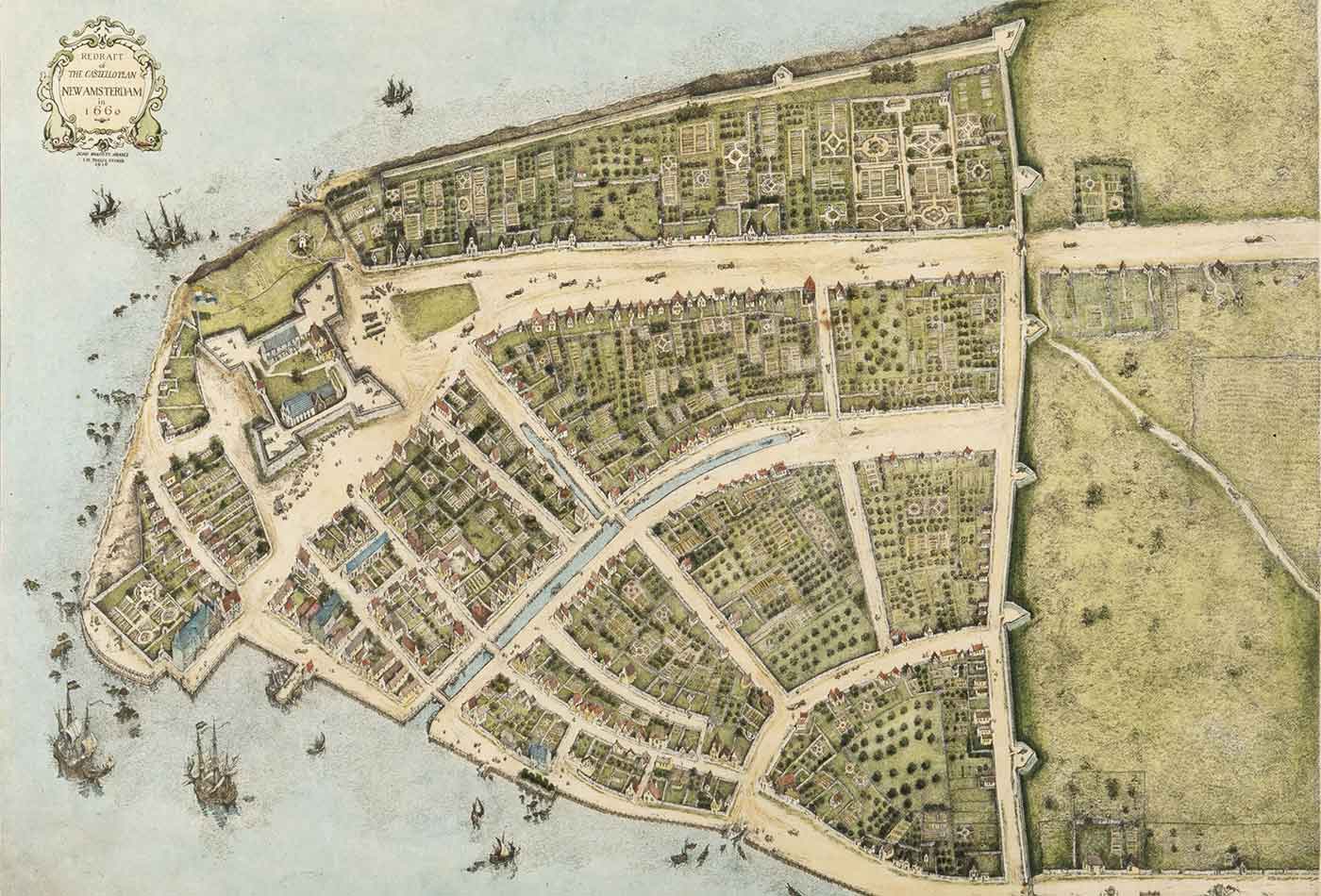
 Redraft of the Castello Plan New Amsterdam in 1660. (source: New York Historical Society Library, Maps Collection, on Wikipedia Commons)
 A couple of decades ago, a company might have relied on a single vendor or fundamental technology for its data program. Now, nearly everyone uses a complex web of open source technologies stitched together by some combination of in-house teams and external integrators. This necessitates a new practice: ecosystem data architecture, which aims to match an organization’s business needs to its data systems.
In this podcast episode, I walk through an introduction to ecosystem data architecture with Bob Montemurro, senior partner for architecture services in the international region for Teradata.
We discuss:
Harmonizing existing data systems with new kinds of data, like sensor data from IoT devices
How data architecture resembles the process of building a subdivision: planning streets and electrical grids, then adding in blueprints for individual houses
Balancing needs from stakeholders in both IT and lines of business
How virtualization is transforming ecosystem data architecture
Cloud versus on-premises data warehousing
Future-proofing data systems
You can find Bob Montemurro on LinkedIn.
This post is a collaboration between Teradata and O’Reilly. See our statement of editorial independence.