February 2017
Intermediate to advanced
192 pages
3h 30m
English
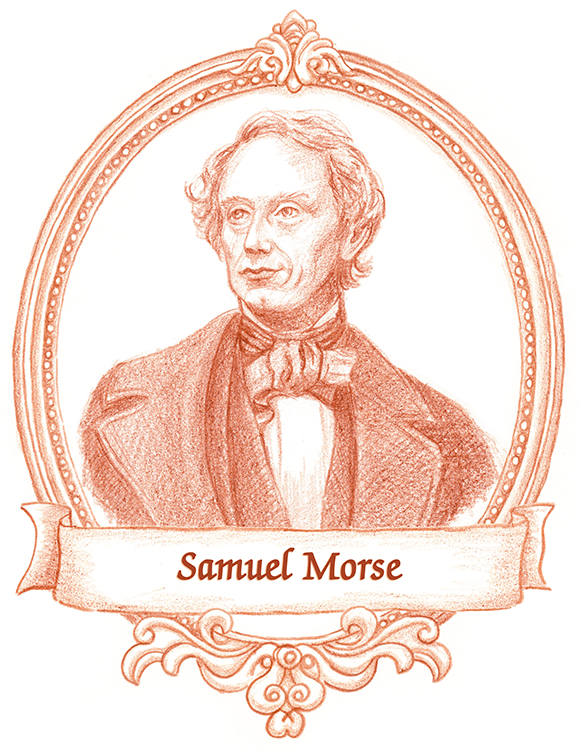
Prior to Samuel F. B. Morse’s invention of the electric telegraph, there was no good way to communicate information across distance at any speed greater than that of a horserider. Sure, there were some limited experiments. Men holding flags called semaphores stood on hilltops and noted one another’s coded movements through spyglasses. This was clumsy and slow. Worse, it was incredibly expensive because it required a lot of men on a lot of hilltops to relay messages over any substantial distance.
In the 1820s and early 1830s, Samuel F. B. Morse was well known as an accomplished painter; he was praised ...
Read now
Unlock full access


 O’Reilly covers everything we've got, with content to help us build a world-class technology community, upgrade the capabilities and competencies of our teams, and improve overall team performance as well as their engagement.I wanted to learn C and C++, but it didn't click for me until I picked up an O'Reilly book. When I went on the O’Reilly platform, I was astonished to find all the books there, plus live events and sandboxes so you could play around with the technology.I’ve been on the O’Reilly platform for more than eight years. I use a couple of learning platforms, but I'm on O'Reilly more than anybody else. When you're there, you start learning. I'm never disappointed.I'm always learning. So when I got on to O'Reilly, I was like a kid in a candy store. There are playlists. There are answers. There's on-demand training. It's worth its weight in gold, in terms of what it allows me to do.