September 2020
Beginner
442 pages
9h 54m
English
Thanks to the two tools’ similar look and feel, Tableau users can prepare their data in Prep Builder for visual analysis in Desktop quickly and easily—that is, until some of those familiar features start to differ. When I’m teaching Prep Builder, aggregation is a common source of pain for my students for this reason. In this chapter, we will cover how aggregation in Prep Builder differs from Desktop, how the Aggregate step works, and how to overcome the biggest challenge of aggregation: adding back into Desktop any column that you may want for further analysis.
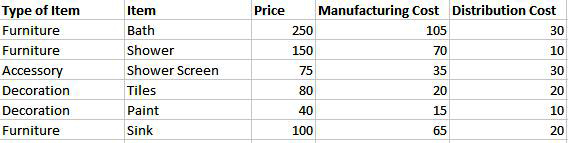
Like Desktop, Prep Builder will work out each calculation at a row level if you don’t use any form of aggregation. For example, if I wanted to calculate the total cost in the simple Bathroom Renovation data set shown in Figure 15-1, I would simply add one cost value to the other, one row at a time.
To add these costs together, we would write the same calculation in Prep Builder as we would in Tableau Desktop (Figure 15-2).
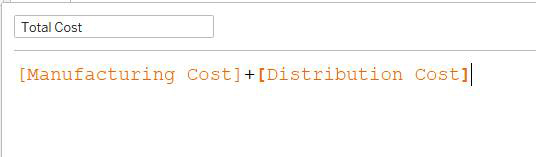
This adds the values together for each row, while creating a new column to hold the total (Figure 15-3).
Read now
Unlock full access


 O’Reilly covers everything we've got, with content to help us build a world-class technology community, upgrade the capabilities and competencies of our teams, and improve overall team performance as well as their engagement.I wanted to learn C and C++, but it didn't click for me until I picked up an O'Reilly book. When I went on the O’Reilly platform, I was astonished to find all the books there, plus live events and sandboxes so you could play around with the technology.I’ve been on the O’Reilly platform for more than eight years. I use a couple of learning platforms, but I'm on O'Reilly more than anybody else. When you're there, you start learning. I'm never disappointed.I'm always learning. So when I got on to O'Reilly, I was like a kid in a candy store. There are playlists. There are answers. There's on-demand training. It's worth its weight in gold, in terms of what it allows me to do.