May 2017
Beginner
432 pages
14h 53m
English
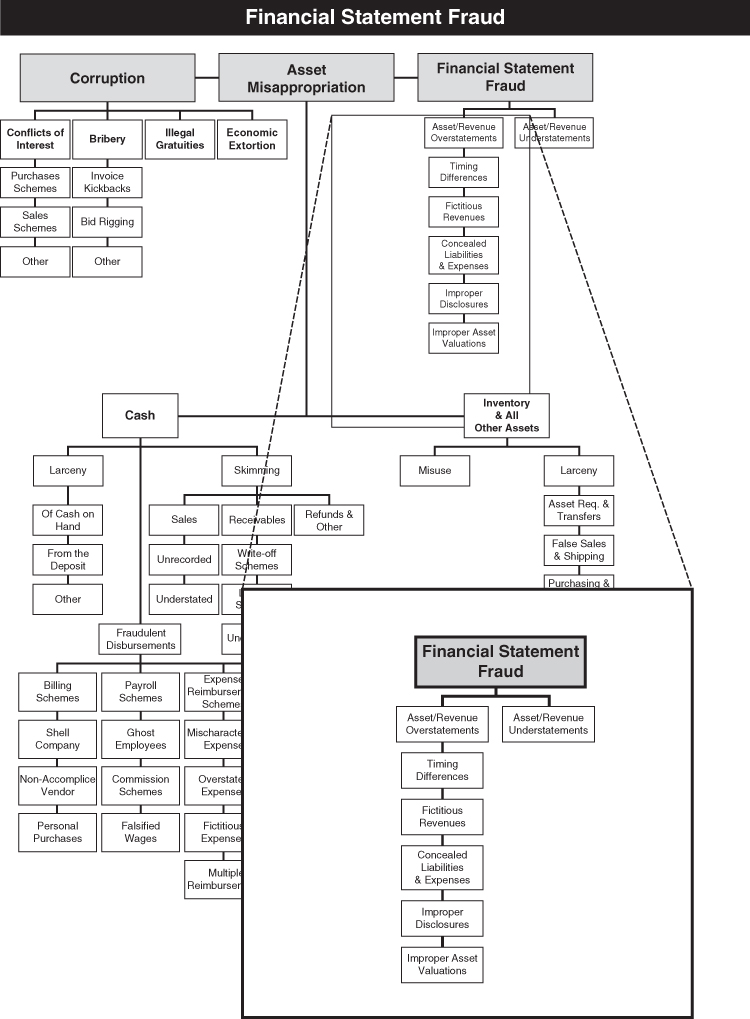
When I was in the FBI during the 1970s and 1980s, most financial statement fraud came from bank borrowers, either individual or corporate. Under the Bank Secrecy Act, financial institutions are required to notify the FBI of possible fraud by their borrowers in connection with a host of activities, most of it dealing with loan fraud.
The typical financial statement fraud case did not impress the typical FBI agent because many of us learned the hard way that some banks attempted to use the government as a collection agency. A common complaint by agents was that the banks would do little due diligence on borrowers before lending money. Many of the financial statements in bank loan files I examined would make an accountant laugh. Most were unaudited, which was a major clue, and a number of them contained simple math errors on the balance sheet or income statement. In short, they did not even add up, perhaps the biggest clue.
But in order for the financial statement fraud to be a violation of federal statutes, the lender was required to have relied on the false financials to some extent in making the loan. In most instances, the reality was that the numbers were in the bank's loan files only to conform with government regulations. Banks, in general, prefer hard collateral. And if the collateral loses its value or disappears ...
Read now
Unlock full access


 O’Reilly covers everything we've got, with content to help us build a world-class technology community, upgrade the capabilities and competencies of our teams, and improve overall team performance as well as their engagement.I wanted to learn C and C++, but it didn't click for me until I picked up an O'Reilly book. When I went on the O’Reilly platform, I was astonished to find all the books there, plus live events and sandboxes so you could play around with the technology.I’ve been on the O’Reilly platform for more than eight years. I use a couple of learning platforms, but I'm on O'Reilly more than anybody else. When you're there, you start learning. I'm never disappointed.I'm always learning. So when I got on to O'Reilly, I was like a kid in a candy store. There are playlists. There are answers. There's on-demand training. It's worth its weight in gold, in terms of what it allows me to do.