January 1995
Intermediate to advanced
360 pages
9h
English
This example is included to suggest that FPGAs may provide novel ways of solving well-known problems. Sorting is required in many computer applications, particularly commercial ones. Here we look at a high-speed sorter, but one confined to miniscule amounts of data. It is described as systolic because it uses a repetitive block structure, and has a regular data flow. In general, each item to be sorted consists of a number of fields, of which one is selected as a key, on which to sort. For simplicity we regard the key as a nonnegative integer, and assume that we wish to sort items in ascending order of their keys. For simplicity, we concentrate on sorting the keys.
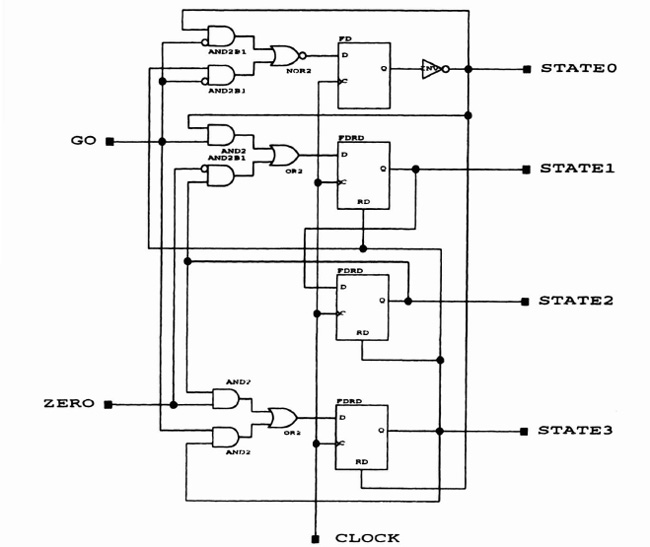
Figure 5–24. Schematic for state machine.
Knuth [Knuth73] distinguishes some basic sorting methods:
Sort by insertion: Find the correct place to insert an item in an already-ordered list
Sort by exchange: Consider pairs of keys, and swap them if out of order
Sort by enumeration: Find the smallest (or largest) key and remove the item to a new list. Repeat until the original list is empty.
The scheme described here is a combination of the first two methods. We assume that the items to be sorted arrive individually, so it makes sense to keep previous arrivals in order—we choose ascending. Borrowing a technique from full-custom VLSI design, we make up blocks of cells, and arrange for simple connections ...
Read now
Unlock full access


 O’Reilly covers everything we've got, with content to help us build a world-class technology community, upgrade the capabilities and competencies of our teams, and improve overall team performance as well as their engagement.I wanted to learn C and C++, but it didn't click for me until I picked up an O'Reilly book. When I went on the O’Reilly platform, I was astonished to find all the books there, plus live events and sandboxes so you could play around with the technology.I’ve been on the O’Reilly platform for more than eight years. I use a couple of learning platforms, but I'm on O'Reilly more than anybody else. When you're there, you start learning. I'm never disappointed.I'm always learning. So when I got on to O'Reilly, I was like a kid in a candy store. There are playlists. There are answers. There's on-demand training. It's worth its weight in gold, in terms of what it allows me to do.