April 2019
Beginner
180 pages
2h 47m
English
A hybrid vehicle (HEV) is a type of automobile which has a conventional power system with an energy storage system (RESS).
Mass production of these vehicles has been taking time due to charge time taken by regenerative braking.
In 1901, Ferdinand Porsche designed a series-hybrid vehicle having a range of 50 km, speed of 50 km/h and a power of 5.22 kW.
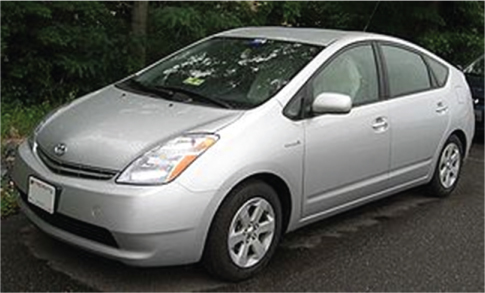
Figure 7.1 Toyota’s HEV.
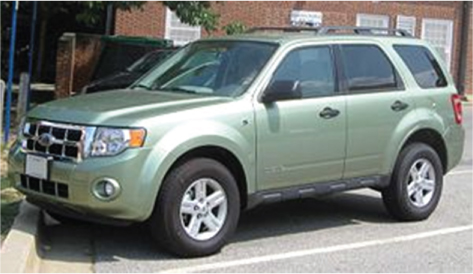
Figure 7.2 The Escape Hybrid, launched in 2004.
A more recent working prototype of the HEV was built by Victor Wouk and earned him the title as the “Godfather of the Hybrid”. Wouk installed a prototype hybrid drivetrain into a 1972 Buick Skylark provided by GM. In 1989, Audi produced its first iteration of the Audi Duo (or Audi 100 Avant duo) experimental vehicle, a plug-in parallel hybrid based on the Audi 100 Avant Quattro. This car had a 12.6 BHPSiemenselectric motor which drove the rear wheels.
Automotive hybrid technology became successful in the 1990s when the Honda Insight and Toyota Prius became available. These vehicles have a direct linkage from the ICE to the driven wheels, so the engine can provide acceleration power.
Figure 7.3 Hybrid vehicle sales chart.
Read now
Unlock full access


 O’Reilly covers everything we've got, with content to help us build a world-class technology community, upgrade the capabilities and competencies of our teams, and improve overall team performance as well as their engagement.I wanted to learn C and C++, but it didn't click for me until I picked up an O'Reilly book. When I went on the O’Reilly platform, I was astonished to find all the books there, plus live events and sandboxes so you could play around with the technology.I’ve been on the O’Reilly platform for more than eight years. I use a couple of learning platforms, but I'm on O'Reilly more than anybody else. When you're there, you start learning. I'm never disappointed.I'm always learning. So when I got on to O'Reilly, I was like a kid in a candy store. There are playlists. There are answers. There's on-demand training. It's worth its weight in gold, in terms of what it allows me to do.