January 2026
Intermediate to advanced
318 pages
8h 44m
English
The secure deployment of large language models represents a critical challenge that operates across multiple security layers. While previous chapters focused on privacy-preserving training techniques, even the most securely trained model can be compromised if not properly deployed. This chapter explores the essential aspects of secure deployment, structured around three fundamental protection layers:
The foundational layer protecting the physical and virtual resources hosting the model
The intermediary layer managing who can interact with the model and how
The operational layer ensuring secure execution during model inference
Figure 5-1 illustrates these three security layers as concentric circles, with infrastructure security forming the outermost layer of defense, access control providing intermediate protection, and runtime security safeguarding the core model operations. Each layer builds upon the previous one, creating a comprehensive security architecture.
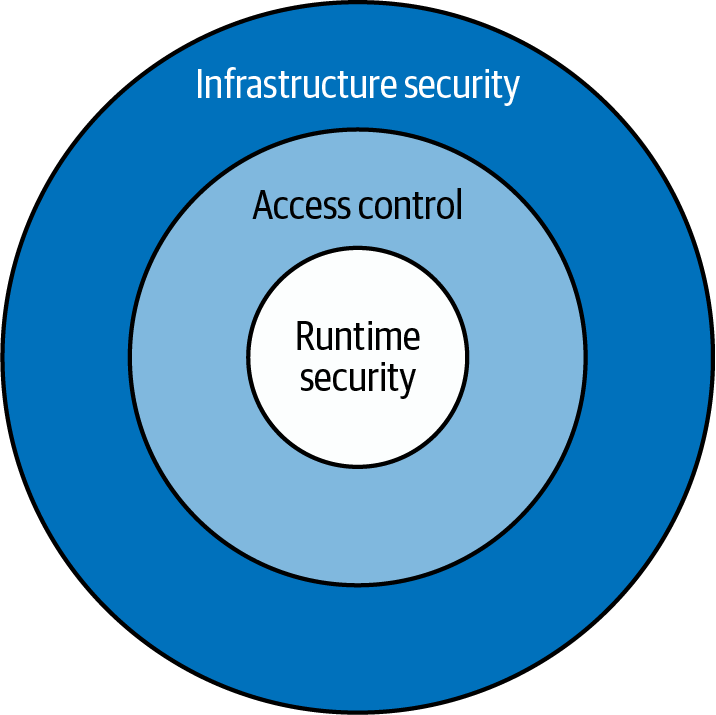
This chapter focuses on the critical aspects of secure deployment, including model hosting, API design, and version management. Deploying LLMs securely requires careful consideration of multiple factors: the infrastructure that hosts the model, the interfaces through ...
Read now
Unlock full access


 O’Reilly covers everything we've got, with content to help us build a world-class technology community, upgrade the capabilities and competencies of our teams, and improve overall team performance as well as their engagement.I wanted to learn C and C++, but it didn't click for me until I picked up an O'Reilly book. When I went on the O’Reilly platform, I was astonished to find all the books there, plus live events and sandboxes so you could play around with the technology.I’ve been on the O’Reilly platform for more than eight years. I use a couple of learning platforms, but I'm on O'Reilly more than anybody else. When you're there, you start learning. I'm never disappointed.I'm always learning. So when I got on to O'Reilly, I was like a kid in a candy store. There are playlists. There are answers. There's on-demand training. It's worth its weight in gold, in terms of what it allows me to do.