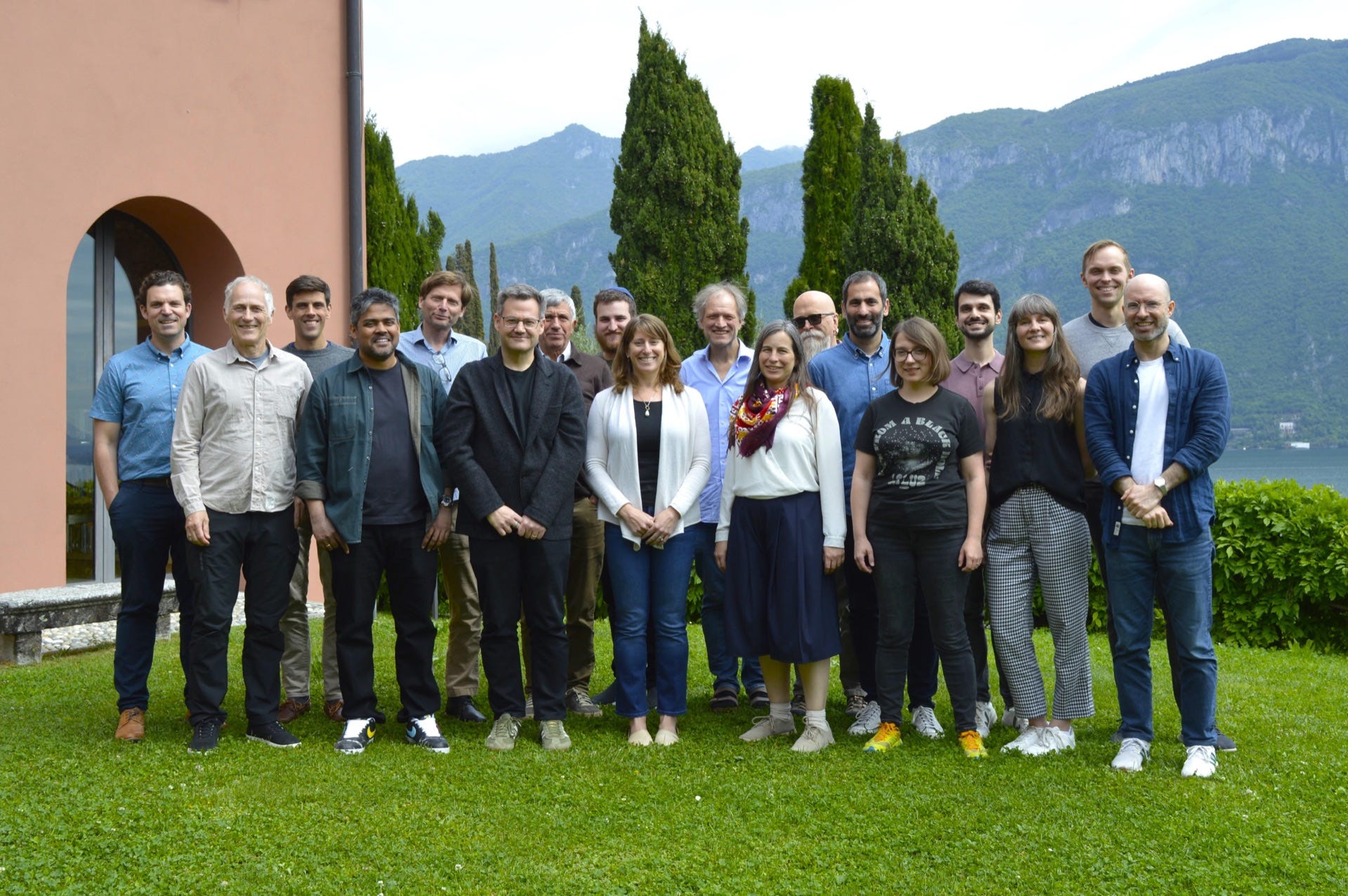
Building accessible tools for large-scale computation and machine learning
The O’Reilly Data Show Podcast: Eric Jonas on Pywren, scientific computation, and machine learning.
What's on our radar.
The O’Reilly Data Show Podcast: Eric Jonas on Pywren, scientific computation, and machine learning.
The O’Reilly Media Podcast: Daniel Krook, IBM developer advocate, on the Call for Code Global Initiative at IBM.
Detecting Skimmers, Forecasting, The Quantum Race, and USB C
Tools and techniques for recruiting UX research participants.
How the UK's NHS uses prototyping to explore and illustrate new technological possibilities.
Fernando Perez talks about UC Berkeley's transition into an environment where many undergraduates use Jupyter and the open data ecosystem as naturally as they use email.
Michelle Gill discusses how data science methods and tools can link information from different scientific fields and accelerate discovery.
Tracy Teal explains how to bring people to data and empower them to address their questions.
Michelle Ufford shares how Netflix leverages notebooks today and describes a brief vision for the future.
Ryan Abernathey makes the case for the large-scale migration of scientific data and research to the cloud.
David Schaaf explains how data science and data engineering can work together to deliver results to decision makers.
Cristian Capdevila explains how Prognos is predicting disease.
Watch keynotes covering Jupyter's role in business, data science, higher education, open source, journalism, and other domains, from JupyterCon in New York 2018.
Will Farr offers lessons about the many advantages and few disadvantages of using Jupyter for global scientific collaborations.
Dan Romuald Mbanga walks through the ecosystem around the machine learning platform and API services at AWS.
Mark Hansen explains how computation has forever changed the practice of journalism.
Luciano Resende explores some of the open source initiatives IBM is leading in the Jupyter ecosystem.
Paco Nathan shares a few unexpected things that emerged in Jupyter in 2018.
Julia Meinwald outlines effective ways to support the unseen labor maintaining a healthy open source ecosystem.
Carol Willing shows how Jupyter's challenges can be addressed by embracing complexity and trusting others.
Lessons from hundreds of development practice assessments across the industry.
It’s only when you enable people to “do things” together that the real power of online social networks is unleashed.
Why hiring a team diverse in perspective and background leads to a great culture.
A conversation with Paul Taylor, chief architect in Watson Data and AI, and IBM fellow.
Chatbots are just the first step in the journey to achieve true AI assistants and autonomous organizations.
The O’Reilly Data Show Podcast: Harish Doddi on accelerating the path from prototype to production.
The deployment of big data tools is being held back by the lack of standards in a number of growth areas.
Get a basic understanding of site reliability engineering (SRE) and then go deeper with recommended resources.
Ways to bring designers and developers together to optimize user experience.
Ray is beginning to be used to power large-scale, real-time AI applications.
Tricks to visualize and understand how neural networks see.
O'Reilly survey results and usage data reveal growing trends and topics in artificial intelligence.
HTTPS "everywhere" means everywhere—not just the login page, or the page where you accept donations. Everything.
How design thinking works, and how it integrates with product development.
UC Berkeley’s startup accelerator takes university research discoveries and helps translate them into marketable products.
Lean UX begins with the idea that user experience design should be a collaborative process.
General intelligence or creativity can only be properly imagined if we peel away the layers of abstractions.
New survey results highlight the ways organizations are handling machine learning's move to the mainstream.
These studies provide a foundation for discussing ethical issues so we can better integrate data ethics in real life.
Achieve high-impact systems monitoring by focusing on latency, errors, throughput, utilization, and blackbox monitoring.
Get advice and insight from speakers who have tackled the challenges you face.
The O’Reilly Data Show Podcast: Chang Liu on operations research, and the interplay between differential privacy and machine learning.
Principles help you align your team quickly around a shared set of product guidelines.
Practical examples of how to integrate personal and tool-based feedback into your code review process.
Tools to fine-tune the wording, formatting, and other aspects of conversation to render rich interactions.
Get hands-on training in blockchain, machine learning, Python, Java, management, and many other topics.
DNA holds the key to storing vast amounts of digital data
We can build a future we want to live in, or we can build a nightmare. The choice is up to us.
The program for our Artificial Intelligence Conference in London is structured to help companies that are still very much in the early stages of AI adoption.
Strategies for assisting users in their journey to find information.
Product design is not a linear process. It’s a set of tools.
Five framing guidelines to help you think about building data products.
Recognizing the interest in ML, the Strata Data Conference program is designed to help companies adopt ML across large sections of their existing operations.
By being intentional and deliberate in your approach, you can build an excellent user experience that performs well regardless of screen size.
The O’Reilly Open Source Awards recognize individual contributors who have demonstrated exceptional leadership, creativity, and collaboration in the development of open source software.
Jerome Hardaway explains how Vets Who Code uses open source to create job opportunities for veterans.
Angie Brown explains how Home Depot uses open source in its stores, online search, order management, analytics, and more.
Sarah Novotny outlines two reasons why open source continues to be important: choice and infrastructure.
Mahdi Yusuf discusses new ways to unlock potential from the data you generate with smart health devices.
Roger Magoulas shares insights about the open source tools ecosystem based on analysis of usage and search data from O'Reilly's learning platform.
Patricia Posey draws on her non-traditional journey into tech to illustrate how honest investments can build a sustainable community that is integral to the advancement of its members.
Jay Gambetta explores Qiskit, an open-source framework that aims to make quantum computing accessible for everyone.
Measuring each stage of the user journey allows you to measure conversions and improve user experience.