August 2025
Intermediate to advanced
448 pages
23h 26m
English
Data processing lies at the core of modern privacy management, encompassing organizations’ actions to collect, organize, analyze, and use personal data. In today’s interconnected world, the volume of data generated and handled by organizations is staggering, making effective processing an operational necessity and a critical privacy concern. Whether it involves analyzing consumer behavior for personalized recommendations or safeguarding sensitive health records, how data is processed has profound implications for individuals and organizations. Understanding the nuances of data processing is key to building robust privacy programs that balance innovation with ethical responsibility.
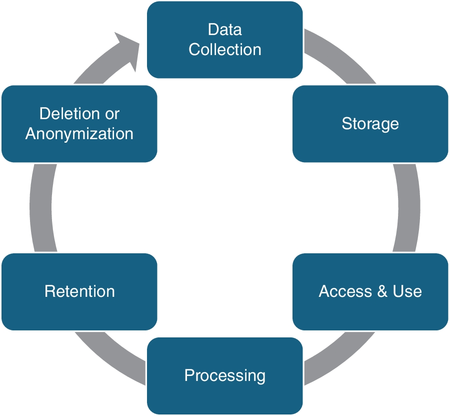
This chapter explores the intricacies of data processing through the lens of key concepts such as automated versus manual processing, profiling, legitimate interests, and handling sensitive data. Each topic highlights the benefits and challenges inherent to different processing approaches while emphasizing the importance of adhering to privacy principles (see Figure 3.1). For example, automated processing offers unparalleled speed and scalability but can introduce risks such as bias or reduced transparency. Similarly, profiling enables businesses to deliver tailored experiences but must be carefully managed to avoid ethical pitfalls like discrimination or overreach.
Read now
Unlock full access


 O’Reilly covers everything we've got, with content to help us build a world-class technology community, upgrade the capabilities and competencies of our teams, and improve overall team performance as well as their engagement.I wanted to learn C and C++, but it didn't click for me until I picked up an O'Reilly book. When I went on the O’Reilly platform, I was astonished to find all the books there, plus live events and sandboxes so you could play around with the technology.I’ve been on the O’Reilly platform for more than eight years. I use a couple of learning platforms, but I'm on O'Reilly more than anybody else. When you're there, you start learning. I'm never disappointed.I'm always learning. So when I got on to O'Reilly, I was like a kid in a candy store. There are playlists. There are answers. There's on-demand training. It's worth its weight in gold, in terms of what it allows me to do.