March 2016
Beginner
200 pages
6h 25m
English
Private equity is not always a separate division within a bank, but can also occur as part of the corporate finance division or treasury. Due to the fact that a private equity investment represents a direct investment in an enterprise and the investor is taking a business risk, investments in public as well as private equity are looked upon favourably by Sharia'a scholars. The two different structures as described in Chapter 3 that are suitable for private equity investments are musharaka and mudaraba transactions.
In a joint venture of musharaka structure, all partners provide capital and skills and expertise to the project. Profits are shared based on a contractually agreed ratio between the partners and any losses are distributed in accordance with the proportion of capital provided. The bank often opts to become a sleeping partner and leaves the running of the business to the other partners, potentially in return for a lower share in the profits.
Musharaka transactions (Figure 8.1) are typically suitable for investments in business ventures or specific business projects, and need to consist of at least two parties, and all partners are known as musharik.
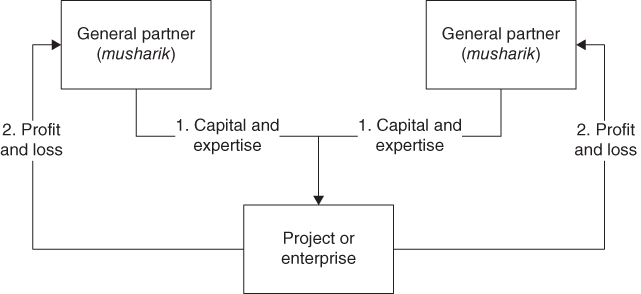
Figure 8.1 Musharaka transaction for private equity
Another option for private equity investment, besides the musharaka transaction, is the mudaraba, a partnership ...
Read now
Unlock full access


 O’Reilly covers everything we've got, with content to help us build a world-class technology community, upgrade the capabilities and competencies of our teams, and improve overall team performance as well as their engagement.I wanted to learn C and C++, but it didn't click for me until I picked up an O'Reilly book. When I went on the O’Reilly platform, I was astonished to find all the books there, plus live events and sandboxes so you could play around with the technology.I’ve been on the O’Reilly platform for more than eight years. I use a couple of learning platforms, but I'm on O'Reilly more than anybody else. When you're there, you start learning. I'm never disappointed.I'm always learning. So when I got on to O'Reilly, I was like a kid in a candy store. There are playlists. There are answers. There's on-demand training. It's worth its weight in gold, in terms of what it allows me to do.