July 2024
Beginner
838 pages
27h 13m
English

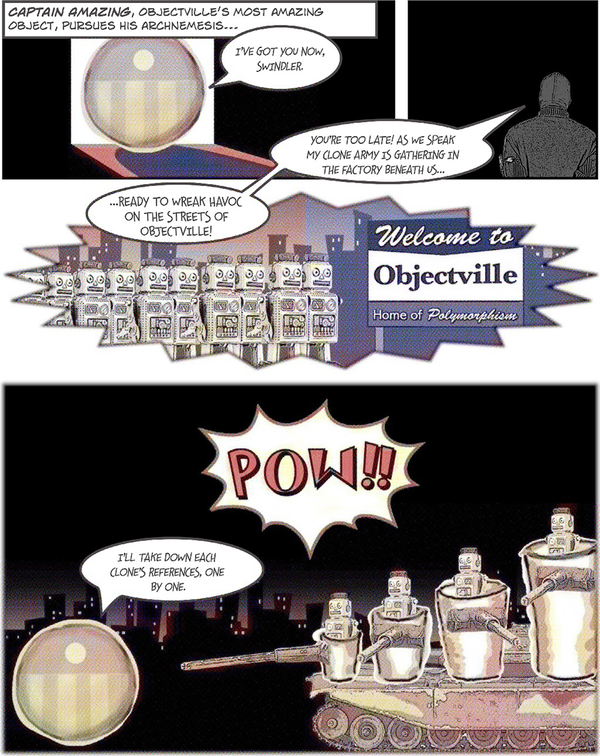
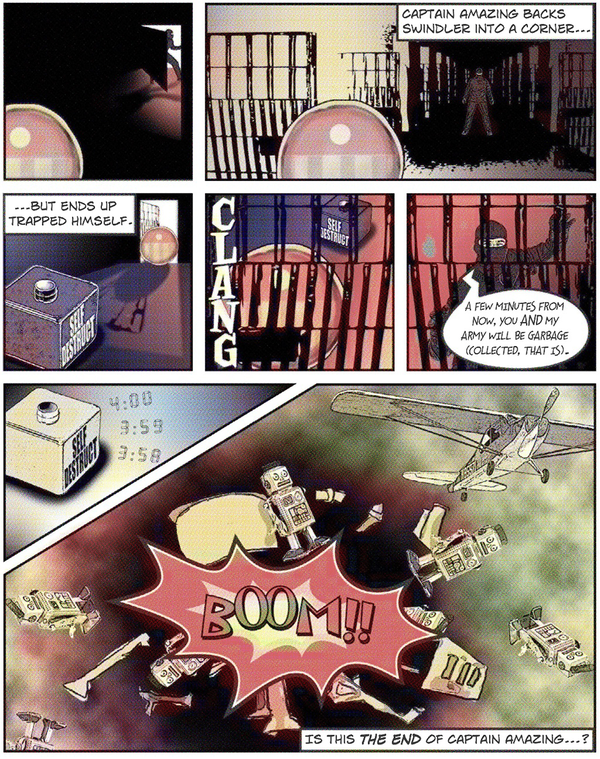
Here’s a quick review of what we know about how objects live and die:
⋆ When you create an object, the CLR—which runs your .NET applications and manages memory—allocates enough memory for it on the heap, a special portion of your computer’s memory reserved for objects and their data.
⋆ It’s kept “alive” by a reference, which can be stored in a variable, a collection, or a property or field of another object.
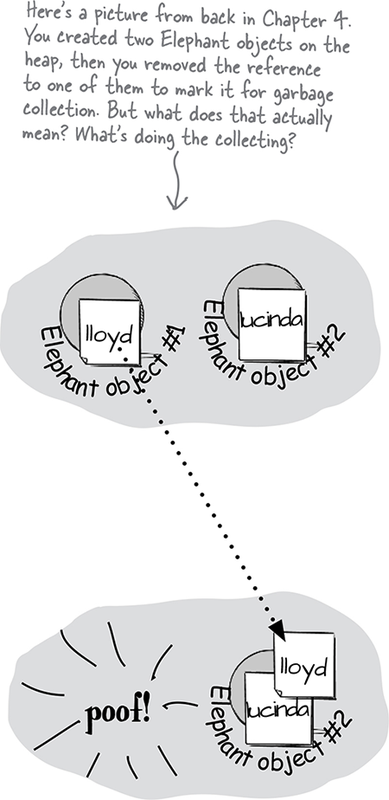
⋆ There can be lots of references to the same object—like you saw in Chapter 4, when you pointed the lloyd and lucinda reference variables to the same instance of Elephant.
⋆ When you took away the last reference to the Elephant object, that caused the CLR to mark it for garbage collection.
⋆ Eventually the CLR removed the Elephant object and the memory was reclaimed so it could be used for new instances of objects that your program would go on to create later.
Now we’ll explore all of these points in more detail, writing small programs that help show how garbage collection works. ...
Read now
Unlock full access


 O’Reilly covers everything we've got, with content to help us build a world-class technology community, upgrade the capabilities and competencies of our teams, and improve overall team performance as well as their engagement.I wanted to learn C and C++, but it didn't click for me until I picked up an O'Reilly book. When I went on the O’Reilly platform, I was astonished to find all the books there, plus live events and sandboxes so you could play around with the technology.I’ve been on the O’Reilly platform for more than eight years. I use a couple of learning platforms, but I'm on O'Reilly more than anybody else. When you're there, you start learning. I'm never disappointed.I'm always learning. So when I got on to O'Reilly, I was like a kid in a candy store. There are playlists. There are answers. There's on-demand training. It's worth its weight in gold, in terms of what it allows me to do.