November 2020
Beginner to intermediate
440 pages
10h 41m
English
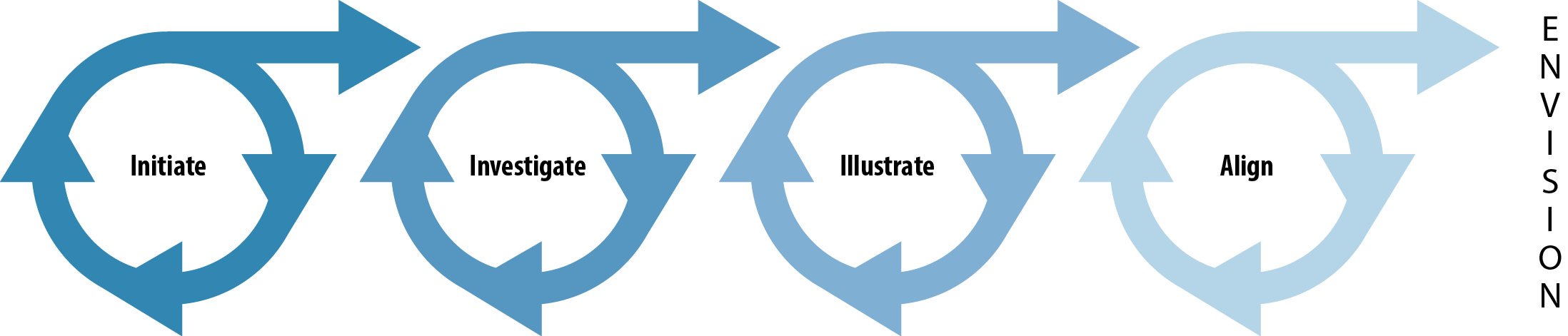
A general process for experience mapping consists of four iterative modes of activity:
The preceding process results in current state maps: depictions of experiences as you observe them today. The aim is to get agreement on how your team understands the experience and what problems are worth solving. Once a direction is decided upon, use mapping techniques to design solutions and test your assumptions with planned experiments, discussed in Chapter 9.
Remember: it’s not about the map (noun), but rather the mapping (verb). Be sure to involve stakeholders and team members throughout the process, at all stages. Get their feedback on your initial proposal, include them in the investigation, create the diagram together, and come together for a workshop at the end of the effort. Don’t make mapping a solitary effort. ...
Read now
Unlock full access


 O’Reilly covers everything we've got, with content to help us build a world-class technology community, upgrade the capabilities and competencies of our teams, and improve overall team performance as well as their engagement.I wanted to learn C and C++, but it didn't click for me until I picked up an O'Reilly book. When I went on the O’Reilly platform, I was astonished to find all the books there, plus live events and sandboxes so you could play around with the technology.I’ve been on the O’Reilly platform for more than eight years. I use a couple of learning platforms, but I'm on O'Reilly more than anybody else. When you're there, you start learning. I'm never disappointed.I'm always learning. So when I got on to O'Reilly, I was like a kid in a candy store. There are playlists. There are answers. There's on-demand training. It's worth its weight in gold, in terms of what it allows me to do.