July 2012
Beginner
256 pages
5h 7m
English
1
Introduction
The basic structure of organic light-emitting diodes (OLEDs) was reported by Ching W. Tang and Steven Van Slyke at Eastman Kodak in 1987 [1]. This was a groundbreaking study and was later referred to as the “first OLED paper.” Now, almost 25 years later, there is a large market place for OLED devices. After the first active-matrix-driven OLED (AMOLED) display was introduced by SK Display (a joint manufacturing venture by Eastman Kodak and Sanyo Electric), the first product using an AMOLED display was Kodak’s LS633 digital camera (see Fig. 1.1). This was followed by the widescale development of many other OLED-based products, including cellular phones, audioplayers (Fig. 1.2), portable multimedia players (Fig. 1.3), and portable global positioning satellite (GPS) devices, which now provide high-resolution displays in brilliant, multitone colors.
Figure 1.1 The first active-matrix OLED display product on the market (Kodak LS633 digital camera).
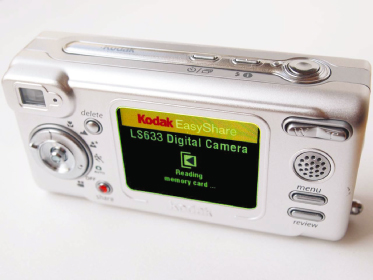
Figure 1.2 Example of an audioplayer using active-matrix OLED (AMOLED) (Sony Walkman NW-X-1050).
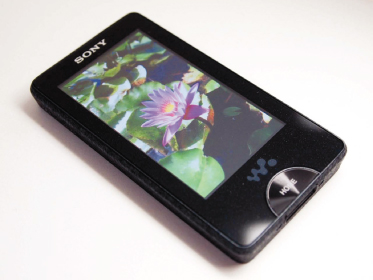
Figure 1.3 Example of a personal multimedia player using AMOLED (Dynaconnective Dawin; original equipment manufacturer [OEM] product of the Neosol Cliod).
Larger-display products have also been introduced on the market, such as those ...
Read now
Unlock full access


 O’Reilly covers everything we've got, with content to help us build a world-class technology community, upgrade the capabilities and competencies of our teams, and improve overall team performance as well as their engagement.I wanted to learn C and C++, but it didn't click for me until I picked up an O'Reilly book. When I went on the O’Reilly platform, I was astonished to find all the books there, plus live events and sandboxes so you could play around with the technology.I’ve been on the O’Reilly platform for more than eight years. I use a couple of learning platforms, but I'm on O'Reilly more than anybody else. When you're there, you start learning. I'm never disappointed.I'm always learning. So when I got on to O'Reilly, I was like a kid in a candy store. There are playlists. There are answers. There's on-demand training. It's worth its weight in gold, in terms of what it allows me to do.