May 2005
Intermediate to advanced
666 pages
21h 5m
English
SSH is a protocol, not a product. It is a specification of how to conduct secure communication over a network.[3]
The SSH protocol covers authentication, encryption, and the integrity of data transmitted over a network, as shown in Figure 1-2. Let’s define these terms:
Reliably determines someone’s identity. If you try to log into an account on a remote computer, SSH asks for digital proof of your identity. If you pass the test, you may log in; otherwise, SSH rejects the connection.
Scrambles data so that it is unintelligible except to the intended recipients. This protects your data as it passes over the network.
Guarantees the data traveling over the network arrives unaltered. If a third party captures and modifies your data in transit, SSH detects this fact.
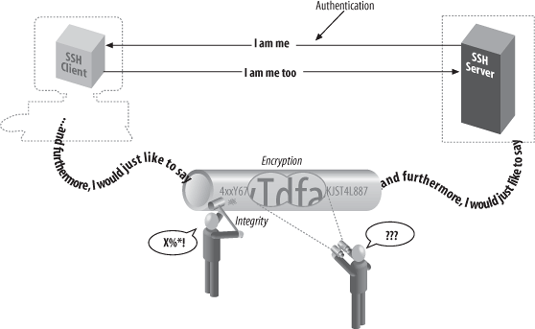
Figure 1-2. Authentication, encryption, and integrity
In short, SSH makes network connections between computers, with strong guarantees that the parties on both ends of the connection are genuine. It also ensures that any data passing over these connections arrives unmodified and unread by eavesdroppers.
The first SSH product, created by Tatu Ylönen for Unix, was simply called “SSH.” This caused confusion because SSH was also the name of the protocol. In this book, we use more precise terminology to refer to protocols, products, and ...
Read now
Unlock full access


 O’Reilly covers everything we've got, with content to help us build a world-class technology community, upgrade the capabilities and competencies of our teams, and improve overall team performance as well as their engagement.I wanted to learn C and C++, but it didn't click for me until I picked up an O'Reilly book. When I went on the O’Reilly platform, I was astonished to find all the books there, plus live events and sandboxes so you could play around with the technology.I’ve been on the O’Reilly platform for more than eight years. I use a couple of learning platforms, but I'm on O'Reilly more than anybody else. When you're there, you start learning. I'm never disappointed.I'm always learning. So when I got on to O'Reilly, I was like a kid in a candy store. There are playlists. There are answers. There's on-demand training. It's worth its weight in gold, in terms of what it allows me to do.