August 2001
Beginner
304 pages
10h 3m
English
Frame relay is a set of link layer functions. Higher-layer protocols chop up user data, and the resulting bite-size pieces are wrapped in frame relay envelopes to be passed to the network for delivery. The link layer protocol associated with frame relay is the Link Access Procedure for Frame Mode Bearer Services—Core Functions, known more simply as the LAPF Core.[20] LAPF, which is specified in Q.922, is a simpler version of ISDN’s LAPD. The basic frame relay frame is shown in Figure 10-3.
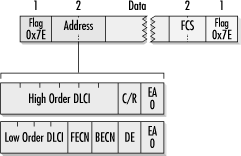
Figure 10-3. The basic frame relay frame
Like the HDLC frame, the frame relay frame opens and closes with a flag. Several header formats may be used, depending on the length of the DLCI. Figure 10-3 shows the most common header format, a 2-byte format that uses 10 bits for the DLCI.[21] At the end of each header byte, the extended address (EA) bit appears. When it is zero, another header byte follows; a one signifies the end of the header. LAPF does not use the command/response (C/R) bit, though higher-layer protocols that require application-specific logic do use this bit.
Frame relay does not include any explicit internode congestion control functions, but it does allow the network to react to congestion in two ways. Traffic in excess of a subscriber’s CIR is marked as discard eligible by setting the discard eligible (DE) bit to one. Frames with ...
Read now
Unlock full access


 O’Reilly covers everything we've got, with content to help us build a world-class technology community, upgrade the capabilities and competencies of our teams, and improve overall team performance as well as their engagement.I wanted to learn C and C++, but it didn't click for me until I picked up an O'Reilly book. When I went on the O’Reilly platform, I was astonished to find all the books there, plus live events and sandboxes so you could play around with the technology.I’ve been on the O’Reilly platform for more than eight years. I use a couple of learning platforms, but I'm on O'Reilly more than anybody else. When you're there, you start learning. I'm never disappointed.I'm always learning. So when I got on to O'Reilly, I was like a kid in a candy store. There are playlists. There are answers. There's on-demand training. It's worth its weight in gold, in terms of what it allows me to do.