November 2021
Intermediate
416 pages
12h 42m
English
“Pull one hair and the whole body moves”
– Zizhen Gong (1792–1841)
One of the most common equations used to model electrical elements in the frequency domain or harmonic domain is
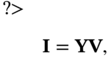
where  is the vector containing voltage harmonics at each node,
  is the vector of current harmonics, and
  is the harmonic admittance matrix. To employ the formulation of 6.1, the harmonic admittance matrix must be found.
For linear time‐invariant (LTI) components such as resistors  , inductors
  , and capacitors
  , these admittance matrices are analytical and can be easily derived via phasor analysis. In addition, the structure of these admittance matrices is diagonal, which means that there is no interaction between harmonic voltages and currents of different orders.
In contrast, ...
Read now
Unlock full access


 O’Reilly covers everything we've got, with content to help us build a world-class technology community, upgrade the capabilities and competencies of our teams, and improve overall team performance as well as their engagement.I wanted to learn C and C++, but it didn't click for me until I picked up an O'Reilly book. When I went on the O’Reilly platform, I was astonished to find all the books there, plus live events and sandboxes so you could play around with the technology.I’ve been on the O’Reilly platform for more than eight years. I use a couple of learning platforms, but I'm on O'Reilly more than anybody else. When you're there, you start learning. I'm never disappointed.I'm always learning. So when I got on to O'Reilly, I was like a kid in a candy store. There are playlists. There are answers. There's on-demand training. It's worth its weight in gold, in terms of what it allows me to do.