November 2000
Intermediate to advanced
216 pages
6h 3m
English
Intrusion detection systems (IDSs) used to be a technology for analyzing host-based audit logs. In recent years, network -based intrusion detection systems (NIDSs) have grown in popularity. A network-based IDS analyzes traffic on a network in real time. If it sees an “attack” pattern on the network, it sends an alert to a management station.
The NIDS often has one network interface without an IP address that is passively monitoring a network. This makes it extremely difficult to attack the NIDS from the monitored network. Another network interface is used to manage the NIDS. A sample NIDS setup is shown in Figure 6.10.
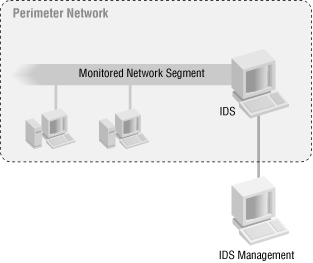
Figure 6-10. An NIDS deployment example
The NIDS matches patterns on the network against its database of known attack signatures. An example of a known attack is the so-called ping of death denial of service attack. The signature of that particular attack is an ICMP echo request that’s larger than the maximum IP datagram size of 65535 bytes.
Intrusion detection systems are useful, but some customers seem to think that an NIDS is the solution to all their problems. There are, however, several problems with network-based IDSs:
As network speeds increase, will the NIDS be able to keep up?
The NIDS cannot ...
Read now
Unlock full access


 O’Reilly covers everything we've got, with content to help us build a world-class technology community, upgrade the capabilities and competencies of our teams, and improve overall team performance as well as their engagement.I wanted to learn C and C++, but it didn't click for me until I picked up an O'Reilly book. When I went on the O’Reilly platform, I was astonished to find all the books there, plus live events and sandboxes so you could play around with the technology.I’ve been on the O’Reilly platform for more than eight years. I use a couple of learning platforms, but I'm on O'Reilly more than anybody else. When you're there, you start learning. I'm never disappointed.I'm always learning. So when I got on to O'Reilly, I was like a kid in a candy store. There are playlists. There are answers. There's on-demand training. It's worth its weight in gold, in terms of what it allows me to do.