December 2011
Intermediate to advanced
444 pages
15h 10m
English
The first step in the process of getting rid of those shaded entries is to apply vertical decomposition to produce a set of tables with the property that no table ever has more than one column with any such entries. (Note: Vertical decomposition—vertical because the dividing lines in the decomposition are between columns, so to speak—is essentially what we do when we do classical normalization.) For the table in Figure C-1, the result of this step is tables SN, ST, and SC as shown in Figure C-2. (For obvious reasons I use T, not S, as an abbreviation for STATUS throughout this appendix.)
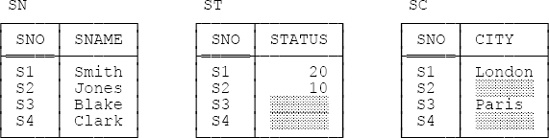
Figure C-2. Vertically decomposing table S
The “obvious” (?) predicates for the tables in Figure C-2 are as follows:
SN: Supplier SNO is named SNAME.
ST: Supplier SNO has status STATUS.
SC: Supplier SNO is located in city CITY.
However, the predicates for ST and SC here are still only approximate, because of those shaded entries—and that’s why we need horizontal decomposition, which I’ll get to in the next section. Note first, however, that each of tables SN, ST, and SC has just two columns. But this state of affairs is a fluke, in a way; it’s a direct result of my choice of example. If the example were different—e.g., if we knew that column STATUS, as well as columns SNO and SNAME, will never contain any shaded entries—then the appropriate vertical decomposition would be as shown ...
Read now
Unlock full access


 O’Reilly covers everything we've got, with content to help us build a world-class technology community, upgrade the capabilities and competencies of our teams, and improve overall team performance as well as their engagement.I wanted to learn C and C++, but it didn't click for me until I picked up an O'Reilly book. When I went on the O’Reilly platform, I was astonished to find all the books there, plus live events and sandboxes so you could play around with the technology.I’ve been on the O’Reilly platform for more than eight years. I use a couple of learning platforms, but I'm on O'Reilly more than anybody else. When you're there, you start learning. I'm never disappointed.I'm always learning. So when I got on to O'Reilly, I was like a kid in a candy store. There are playlists. There are answers. There's on-demand training. It's worth its weight in gold, in terms of what it allows me to do.