October 2000
Intermediate to advanced
288 pages
9h 22m
English
Random-task graphs have been generated with varying sizes (10–100 nodes). The execution times needed to obtain the solution for the different task graphs are provided. This is followed by experiments in which the characteristics of the task graphs are varied in terms of the communication and execution times (better known as the C/P ratio). The variation of the C/P ratio helps in identifying the nature of the problems that GAs are better suited to handle.
A realistic method has been used to randomly generate the task graphs. The steps used to generate such graphs are as follows [11]:
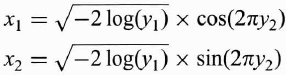
N(μ, σ) = N(0, 1) × σ + μ
The GA has been found to converge to a near optimal solution in a relatively short period of time. A typical behavior of the GA in converging to a solution can be seen in Fig. 5.7.
From observation of many such graphs, the following points about GAs have been noted.
Read now
Unlock full access


 O’Reilly covers everything we've got, with content to help us build a world-class technology community, upgrade the capabilities and competencies of our teams, and improve overall team performance as well as their engagement.I wanted to learn C and C++, but it didn't click for me until I picked up an O'Reilly book. When I went on the O’Reilly platform, I was astonished to find all the books there, plus live events and sandboxes so you could play around with the technology.I’ve been on the O’Reilly platform for more than eight years. I use a couple of learning platforms, but I'm on O'Reilly more than anybody else. When you're there, you start learning. I'm never disappointed.I'm always learning. So when I got on to O'Reilly, I was like a kid in a candy store. There are playlists. There are answers. There's on-demand training. It's worth its weight in gold, in terms of what it allows me to do.