October 2000
Intermediate to advanced
288 pages
9h 22m
English
This study implemented 11 different static meta-task mapping heuristics, including 2 evolutionary approaches, so a comparison could be made of their performance using a common simulated HC environment [6]. Section 6.6.2 presents information about how the ETC matrices were generated. Descriptions of the 11 heuristics implemented appear in Section 6.6.3. Last, a sampling of results from the experiments are shown in Section 6.6.4.
For the simulation studies, characteristics of the ETC matrices were varied in an attempt to represent a range of possible HC environments. The ETC matrices used were generated using the following method. Initially, a |T| × 1 baseline column vector, B, of floating-point values is created. Let  b be the upper bound of the range of possible values within the baseline vector. The baseline column vector is generated by repeatedly selecting a uniform random number,
 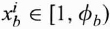 , and
, and  for 0 ≤ i < |T|. Next, the rows of the ETC matrix are constructed. Each element ETC(i, j) in row i of the ETC matrix is created by taking the baseline value, B(i), and multiplying it by a uniform random number, ...
Read now
Unlock full access


 O’Reilly covers everything we've got, with content to help us build a world-class technology community, upgrade the capabilities and competencies of our teams, and improve overall team performance as well as their engagement.I wanted to learn C and C++, but it didn't click for me until I picked up an O'Reilly book. When I went on the O’Reilly platform, I was astonished to find all the books there, plus live events and sandboxes so you could play around with the technology.I’ve been on the O’Reilly platform for more than eight years. I use a couple of learning platforms, but I'm on O'Reilly more than anybody else. When you're there, you start learning. I'm never disappointed.I'm always learning. So when I got on to O'Reilly, I was like a kid in a candy store. There are playlists. There are answers. There's on-demand training. It's worth its weight in gold, in terms of what it allows me to do.