October 2000
Intermediate to advanced
288 pages
9h 22m
English
The quality of the suboptimal solution obtained using GAs depends a great deal on the form of the fitness function employed, and the type and rate of genetic operators. In addition, GAs can differ in chromosome representation. Three PGA-based techniques for solving the TMP are presented in this chapter. All three methods are based on the decomposition approach. In all of them, the task graph is assumed static. In other words, there is no dynamic process creation and all known communication latencies between processes remain unchanged for the lifetime of the application. GA implementations can also differ in the chromosome representation, the fitness function selected, and in the genetic operators and operator rates used. Therefore, these issues will be considered in presenting the alternative GA task-mapping methods.
The following notation is used in the rest of this chapter:
| M | The number of tasks to be mapped |
| N | The number of processors in the target architecture |
| W(p) | The total weight of all tasks assigned to processor p |
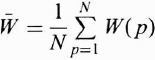 |
The ideal computational load for each processor, which is also the average weight among all processors |
| dij | The distance between processors i and j |
| exy | The edge weight between a task tx in processor i and a task ty in processor j |
| cij = dij Σx Σy exy | The communication cost between processors |
Read now
Unlock full access


 O’Reilly covers everything we've got, with content to help us build a world-class technology community, upgrade the capabilities and competencies of our teams, and improve overall team performance as well as their engagement.I wanted to learn C and C++, but it didn't click for me until I picked up an O'Reilly book. When I went on the O’Reilly platform, I was astonished to find all the books there, plus live events and sandboxes so you could play around with the technology.I’ve been on the O’Reilly platform for more than eight years. I use a couple of learning platforms, but I'm on O'Reilly more than anybody else. When you're there, you start learning. I'm never disappointed.I'm always learning. So when I got on to O'Reilly, I was like a kid in a candy store. There are playlists. There are answers. There's on-demand training. It's worth its weight in gold, in terms of what it allows me to do.