June 2001
Intermediate to advanced
384 pages
11h 36m
English
Uniprocessor systems, like the one shown in Figure 11-1, are the simplest systems in terms of architecture. Each of these systems (typically a standard personal computer) contains a single CPU and a single I/O channel and is made entirely with industry-standard components. They are most often used as single-user standalone machines; for example, for database development or as client machines in a network. Some uniprocessor machines are also used as small servers for databases. Versions of this architecture made with more exotic RISC-based CPUs are typically used as engineering, scientific, or graphics workstations today.
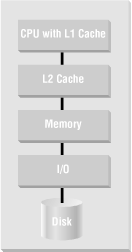
Figure 11-1. Typical uniprocessor system
Until the 1990s, uniprocessor systems were frequently used as servers because of their low price and the limited ability of relational databases to fully utilize other types of systems. However, Oracle evolved to take advantage of systems containing multiple CPUs through improved parallelism and more sophisticated optimization. At the same time, the price points of Symmetric Multiprocessing (SMP) systems (described in the next section) have plummeted dramatically, making SMP systems the database hardware servers of choice.
Although there is only a single processor in a uniprocessor system, the server operating systems used by these systems now support multiple threads. Each thread can be used to support ...
Read now
Unlock full access


 O’Reilly covers everything we've got, with content to help us build a world-class technology community, upgrade the capabilities and competencies of our teams, and improve overall team performance as well as their engagement.I wanted to learn C and C++, but it didn't click for me until I picked up an O'Reilly book. When I went on the O’Reilly platform, I was astonished to find all the books there, plus live events and sandboxes so you could play around with the technology.I’ve been on the O’Reilly platform for more than eight years. I use a couple of learning platforms, but I'm on O'Reilly more than anybody else. When you're there, you start learning. I'm never disappointed.I'm always learning. So when I got on to O'Reilly, I was like a kid in a candy store. There are playlists. There are answers. There's on-demand training. It's worth its weight in gold, in terms of what it allows me to do.