May 2005
Beginner to intermediate
398 pages
12h 12m
English
Now let's look at a complete system based on a PIC processor. The design presented here is a simplified version of my DL4 datalogger product. This datalogger is designed for extended recording of data (for at least a year), using a minimum of power. It has 1M of nonvolatile memory, capable of retaining data without power for as much as 20 years. The sensors fitted are light and temperature, but you could easily adapt this design to record any analog sensor you like, from acceleration to magnetic field. It's also small. The entire datalogger fits onto a circuit board smaller than your smallest finger.
The processor is a PIC16LF873A, a variant of the PIC16C73. The "L" means that it is low-power, and the "F" means that it is a flash-based part (rather than EPROM or OTP) that can be reprogrammed in-circuit, making debugging (and life) so much easier. The "8" indicates that the processor includes EEPROM for nonvolatile parameter storage, useful for holding user preferences and machine state. Finally, the "A" tells us that it is a second revision (version) of the silicon. The basic circuit for the processor and its support components is shown in Figure 14-6.
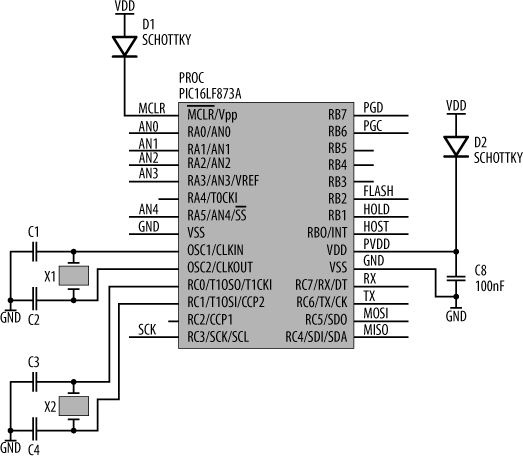
Figure 14-6. Datalogger processor and support components
Note that the processor's power pin is connected to a net labeled PVDD rather than the system's VDD. Since the processor can be reprogrammed ...
Read now
Unlock full access


 O’Reilly covers everything we've got, with content to help us build a world-class technology community, upgrade the capabilities and competencies of our teams, and improve overall team performance as well as their engagement.I wanted to learn C and C++, but it didn't click for me until I picked up an O'Reilly book. When I went on the O’Reilly platform, I was astonished to find all the books there, plus live events and sandboxes so you could play around with the technology.I’ve been on the O’Reilly platform for more than eight years. I use a couple of learning platforms, but I'm on O'Reilly more than anybody else. When you're there, you start learning. I'm never disappointed.I'm always learning. So when I got on to O'Reilly, I was like a kid in a candy store. There are playlists. There are answers. There's on-demand training. It's worth its weight in gold, in terms of what it allows me to do.