April 2026
Intermediate
400 pages
9h 26m
English
The project management profession has evolved significantly since its formal recognition in the early 1970s. During this period, the career path for project managers was relatively straightforward and linear, with professionals typically progressing through a series of well‐defined roles and responsibilities.
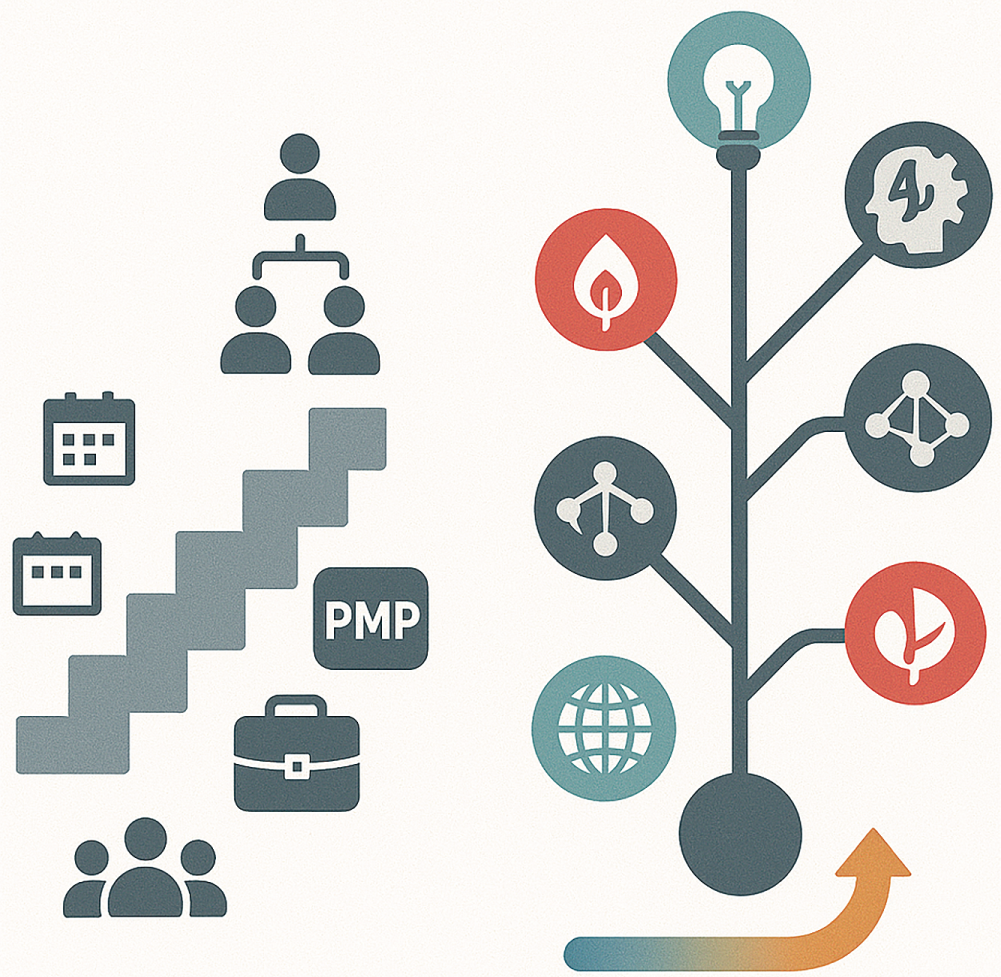
In the 1970s and 1980s, project management appeared as a distinct discipline, primarily in the construction, aerospace, and defense industries. The career path often began with individuals starting as project team members or junior project coordinators. These entry‐level positions provided opportunities to gain hands‐on experience in project execution and familiarize themselves with basic project management concepts (Kerzner 2022).
As professionals gained experience, they typically advanced to the roles of assistant project manager or project coordinator. They took on more responsibilities in these positions, such as scheduling, resource allocation, and stakeholder communication. This stage of the career path allowed aspiring project managers to develop their skills in planning, organizing, and controlling project activities (Pinto 2019).
The next step in the traditional career path was often the role of project manager. In this ...
Read now
Unlock full access


 O’Reilly covers everything we've got, with content to help us build a world-class technology community, upgrade the capabilities and competencies of our teams, and improve overall team performance as well as their engagement.I wanted to learn C and C++, but it didn't click for me until I picked up an O'Reilly book. When I went on the O’Reilly platform, I was astonished to find all the books there, plus live events and sandboxes so you could play around with the technology.I’ve been on the O’Reilly platform for more than eight years. I use a couple of learning platforms, but I'm on O'Reilly more than anybody else. When you're there, you start learning. I'm never disappointed.I'm always learning. So when I got on to O'Reilly, I was like a kid in a candy store. There are playlists. There are answers. There's on-demand training. It's worth its weight in gold, in terms of what it allows me to do.