July 2026
Intermediate
480 pages
20h 9m
English
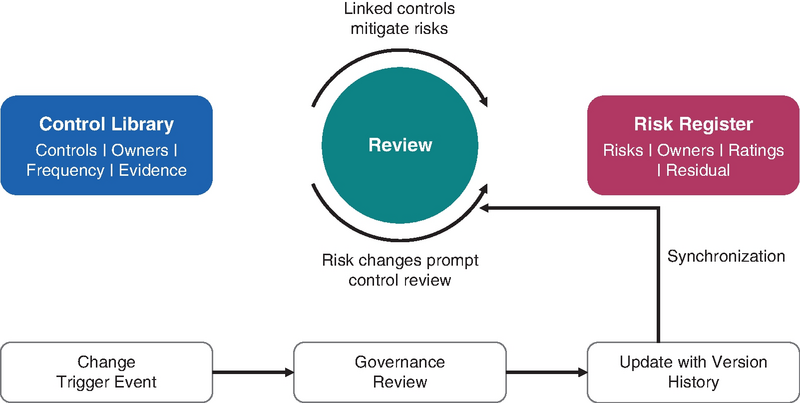
Audit exists at the intersection of governance and trust—the discipline that verifies whether risk management is more than a promise. In cybersecurity, that trust depends on how well assurance functions are defined, empowered, and executed. This chapter examines the structures that make independence real: from the authority granted in an audit charter to the flow of information between the board, the CISO, legal, and privacy leaders. It explores how policies, standards, and procedures become auditable systems rather than documents, and how control libraries and risk registers anchor those systems in measurable accountability.
Understanding these governance foundations is essential in an era when digital ecosystems evolve faster than oversight frameworks. Artificial intelligence, automation, and continuous delivery reshape how organizations identify and mitigate risk, but they also amplify the cost of weak governance. Effective auditors must therefore trace assurance from principle to proof—linking intent, control design, and evidence stored across cloud, CI/CD, and monitoring platforms. The result is not only regulatory compliance but operational confidence in how security decisions are made, justified, and sustained.
From independence boundaries to exception management, this chapter highlights how a modern ...
Read now
Unlock full access


 O’Reilly covers everything we've got, with content to help us build a world-class technology community, upgrade the capabilities and competencies of our teams, and improve overall team performance as well as their engagement.I wanted to learn C and C++, but it didn't click for me until I picked up an O'Reilly book. When I went on the O’Reilly platform, I was astonished to find all the books there, plus live events and sandboxes so you could play around with the technology.I’ve been on the O’Reilly platform for more than eight years. I use a couple of learning platforms, but I'm on O'Reilly more than anybody else. When you're there, you start learning. I'm never disappointed.I'm always learning. So when I got on to O'Reilly, I was like a kid in a candy store. There are playlists. There are answers. There's on-demand training. It's worth its weight in gold, in terms of what it allows me to do.