July 2026
Intermediate
480 pages
20h 9m
English
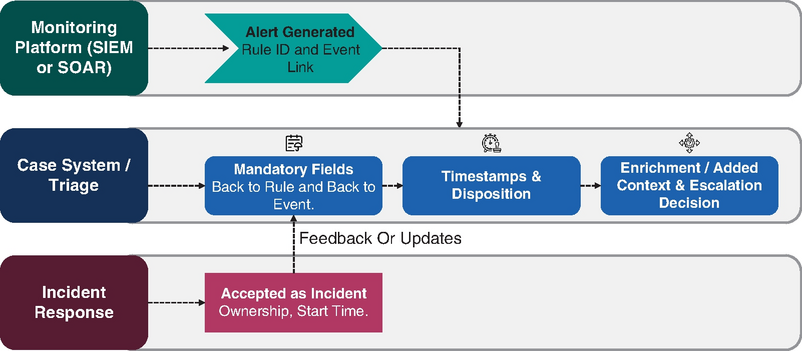
Effective security auditing depends on the ability to see, understand, and trust what systems are doing at every moment. Logging, monitoring, and detection form the evidentiary core of that visibility. They translate the billions of transactions, authentications, and data movements occurring across modern infrastructures into interpretable signals that auditors and defenders can evaluate. When governed properly, these signals become the factual backbone of risk assessments and compliance assurance. Without them, both operational detection and audit validation become guesswork—leaving organizations blind to misuse, misconfiguration, and emerging threats.
Modern enterprises operate in environments that are both distributed and dynamic—spanning on-premises systems, cloud services, and AI-driven analytics pipelines. Within this complexity, ensuring trustworthy telemetry, reliable log retention, and accurate detection content is vital not just for incident investigation but for organizational accountability. Effective monitoring requires balancing completeness with precision: knowing what to collect, how long to retain it, and how to interpret it without overwhelming teams or systems. This chapter’s focus on coverage, integrity, tuning, and governance connects these operational practices directly to audit assurance, emphasizing that visibility ...
Read now
Unlock full access


 O’Reilly covers everything we've got, with content to help us build a world-class technology community, upgrade the capabilities and competencies of our teams, and improve overall team performance as well as their engagement.I wanted to learn C and C++, but it didn't click for me until I picked up an O'Reilly book. When I went on the O’Reilly platform, I was astonished to find all the books there, plus live events and sandboxes so you could play around with the technology.I’ve been on the O’Reilly platform for more than eight years. I use a couple of learning platforms, but I'm on O'Reilly more than anybody else. When you're there, you start learning. I'm never disappointed.I'm always learning. So when I got on to O'Reilly, I was like a kid in a candy store. There are playlists. There are answers. There's on-demand training. It's worth its weight in gold, in terms of what it allows me to do.