July 2026
Intermediate
480 pages
20h 9m
English
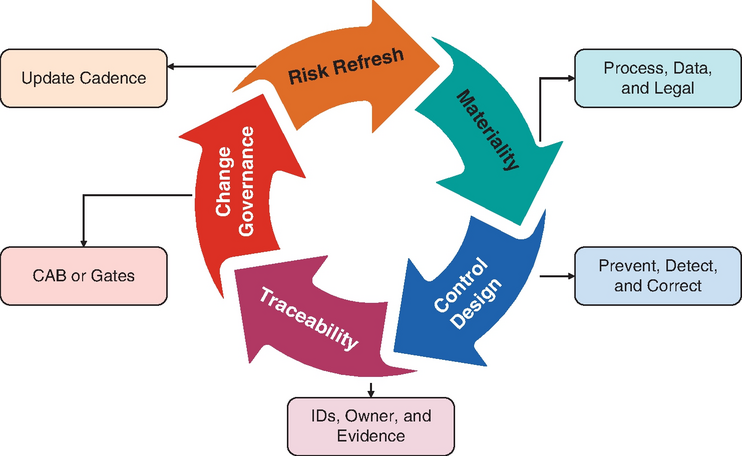
Modern cybersecurity auditing begins long before a test script runs or evidence is collected—it starts at the design table, where risk, architecture, and control intent intersect. The ability to trace a threat through to its corresponding control, owner, and assurance evidence defines whether an organization manages risk deliberately or by accident. This chapter establishes that linkage, showing how effective audit oversight depends on structured taxonomies, materiality thresholds, and design choices that align preventive, detective, and corrective safeguards with business priorities. Understanding these foundations is essential to ensure that assurance activities measure not just compliance, but the integrity of the organization’s entire security architecture.
Design quality determines audit quality. Preventive versus detective controls, manual versus automated enforcement, and the documentation that connects them form the practical core of governance assurance. Auditors must be able to evaluate control sufficiency without becoming part of the design process, maintaining independence while still contributing to secure-by-design outcomes. Through structured documentation, clear ownership, and disciplined change governance, control design becomes testable, traceable, and sustainable—qualities that allow future audits ...
Read now
Unlock full access


 O’Reilly covers everything we've got, with content to help us build a world-class technology community, upgrade the capabilities and competencies of our teams, and improve overall team performance as well as their engagement.I wanted to learn C and C++, but it didn't click for me until I picked up an O'Reilly book. When I went on the O’Reilly platform, I was astonished to find all the books there, plus live events and sandboxes so you could play around with the technology.I’ve been on the O’Reilly platform for more than eight years. I use a couple of learning platforms, but I'm on O'Reilly more than anybody else. When you're there, you start learning. I'm never disappointed.I'm always learning. So when I got on to O'Reilly, I was like a kid in a candy store. There are playlists. There are answers. There's on-demand training. It's worth its weight in gold, in terms of what it allows me to do.