July 2026
Intermediate
480 pages
20h 9m
English
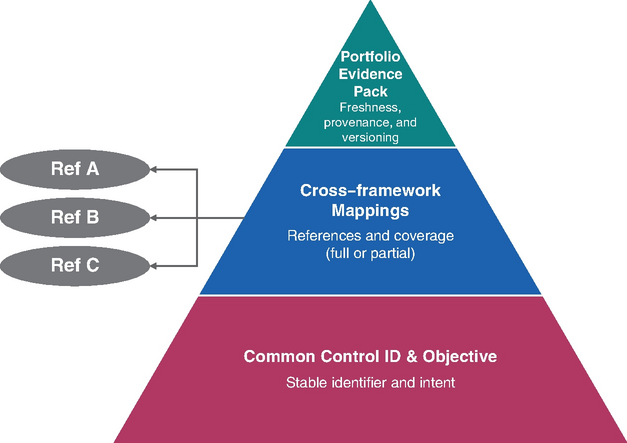
Security standards and regulations form the foundation upon which every cybersecurity assurance program is built. They transform abstract expectations of “good security” into measurable, auditable requirements that define how systems, data, and organizations must behave under scrutiny. Understanding how auditors apply these frameworks is essential to building programs that withstand both regulatory review and operational reality. In an era where organizations operate across multiple jurisdictions, cloud providers, and data protection regimes, the ability to interpret and align these standards determines whether governance remains coherent or collapses into duplication and confusion.
Effective auditors must see beyond the letter of a standard to the intent of its control objectives. Evaluating security through the lens of frameworks, assertions, and evidence requires more than checklist compliance—it demands judgment about sufficiency, traceability, and scope. This chapter examines how auditors define assurance criteria, harmonize control sets across regimes, and evaluate equivalency without sacrificing rigor. It also explains how scoping, mapping, and reliance decisions affect the credibility of assurance, especially when responsibilities are distributed across third parties, cloud providers, and shared infrastructures.
The importance ...
Read now
Unlock full access


 O’Reilly covers everything we've got, with content to help us build a world-class technology community, upgrade the capabilities and competencies of our teams, and improve overall team performance as well as their engagement.I wanted to learn C and C++, but it didn't click for me until I picked up an O'Reilly book. When I went on the O’Reilly platform, I was astonished to find all the books there, plus live events and sandboxes so you could play around with the technology.I’ve been on the O’Reilly platform for more than eight years. I use a couple of learning platforms, but I'm on O'Reilly more than anybody else. When you're there, you start learning. I'm never disappointed.I'm always learning. So when I got on to O'Reilly, I was like a kid in a candy store. There are playlists. There are answers. There's on-demand training. It's worth its weight in gold, in terms of what it allows me to do.