July 2026
Intermediate
480 pages
20h 9m
English
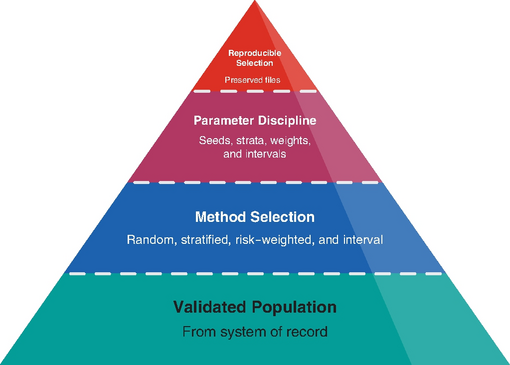
Evidence and testing form the heartbeat of cybersecurity auditing, transforming abstract control statements into measurable assurance. Without disciplined evidence evaluation, sampling strategy, and procedural rigor, even the most advanced audit program risks collapsing under scrutiny. This chapter examines how auditors convert vast, complex data into defensible conclusions—through principles of evidence quality, chain of custody, sampling methodology, and testing precision. Understanding these foundations is essential to establishing credibility in assurance work, where every finding must withstand both technical and legal review.
Modern digital environments generate more data than any auditor can inspect manually, yet the expectation of accuracy and completeness has never been higher. From verifying control design to testing operational performance across automated and human processes, the auditor must apply structured reasoning and analytic rigor. Techniques such as inspection, re-performance, and analytics-assisted testing extend audit coverage while preserving reproducibility and integrity. The result is not just compliance evidence but operational insight—showing how effectively an organization’s security controls function in practice over time.
In the age of AI-driven systems and continuous monitoring, the ability to ...
Read now
Unlock full access


 O’Reilly covers everything we've got, with content to help us build a world-class technology community, upgrade the capabilities and competencies of our teams, and improve overall team performance as well as their engagement.I wanted to learn C and C++, but it didn't click for me until I picked up an O'Reilly book. When I went on the O’Reilly platform, I was astonished to find all the books there, plus live events and sandboxes so you could play around with the technology.I’ve been on the O’Reilly platform for more than eight years. I use a couple of learning platforms, but I'm on O'Reilly more than anybody else. When you're there, you start learning. I'm never disappointed.I'm always learning. So when I got on to O'Reilly, I was like a kid in a candy store. There are playlists. There are answers. There's on-demand training. It's worth its weight in gold, in terms of what it allows me to do.