July 2026
Intermediate
480 pages
20h 9m
English
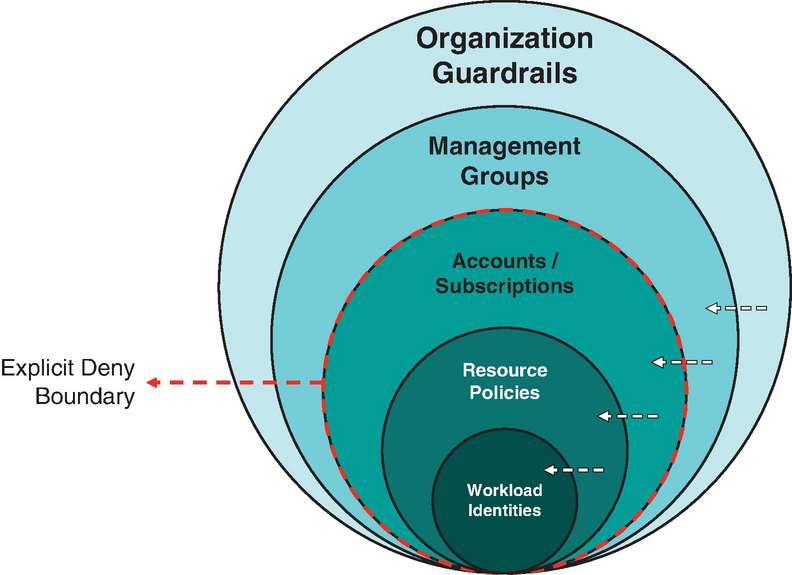
Modern cloud ecosystems have reshaped how organizations think about control, accountability, and assurance. As enterprises shift workloads to Infrastructure, Platform, and Software as a Service environments, traditional audit boundaries dissolve into shared responsibility models that demand precision and technical fluency. Understanding where provider obligations end and tenant accountability begins is essential to establishing credible audit scope and defensible evidence chains. The complexity of distributed identity systems, ephemeral infrastructure, and automated orchestration means that assurance now depends less on physical controls and more on verifiable configuration states, governance policies, and telemetry coverage.
Effective cybersecurity auditing in the cloud requires the ability to evaluate not just policy, but posture. This chapter examines how identity boundaries, baseline configurations, and logging coverage converge to define what can be tested and trusted. It explores how keys and secrets are governed at the data plane, how segmentation prevents lateral movement, and how evidence is gathered across multi-tenant architectures. By emphasizing exportable, machine-verifiable states rather than screenshots or manual attestations, this chapter reinforces the principle that cloud assurance must be repeatable, transparent, and data-driven. ...
Read now
Unlock full access


 O’Reilly covers everything we've got, with content to help us build a world-class technology community, upgrade the capabilities and competencies of our teams, and improve overall team performance as well as their engagement.I wanted to learn C and C++, but it didn't click for me until I picked up an O'Reilly book. When I went on the O’Reilly platform, I was astonished to find all the books there, plus live events and sandboxes so you could play around with the technology.I’ve been on the O’Reilly platform for more than eight years. I use a couple of learning platforms, but I'm on O'Reilly more than anybody else. When you're there, you start learning. I'm never disappointed.I'm always learning. So when I got on to O'Reilly, I was like a kid in a candy store. There are playlists. There are answers. There's on-demand training. It's worth its weight in gold, in terms of what it allows me to do.