July 2026
Intermediate
480 pages
20h 9m
English
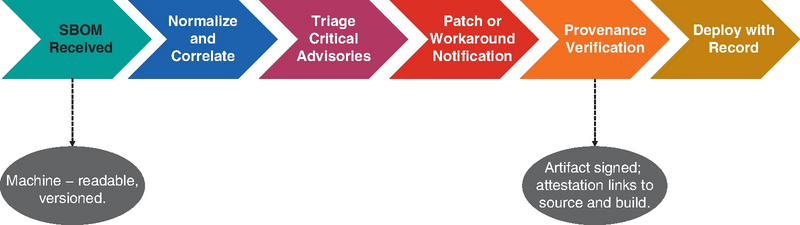
The integrity of an organization’s security posture increasingly depends on the resilience of its third parties and suppliers. As enterprises adopt interconnected platforms, outsourced services, and AI-driven capabilities, the attack surface expands beyond what internal controls can contain. Breaches now often originate not from direct compromise, but from weak links in software supply chains or vendor ecosystems that lack transparency and accountability. Understanding how to evaluate, segment, and continuously monitor these external dependencies is essential to sustaining both operational resilience and regulatory trust in an era where assurance must extend across organizational boundaries.
Effective third-party and supply-chain security requires more than contract clauses or vendor scorecards—it demands a structured, evidence-based risk model. The discipline of cybersecurity auditing provides this structure by defining how vendors are classified, how diligence is scaled to risk, and how assurance artifacts substantiate ongoing performance. From risk tiering and contractual enforcement to continuous monitoring and software provenance, the principles covered here enable auditors to transform fragmented oversight into a cohesive control life cycle. This approach aligns with modern governance frameworks that expect demonstrable proof ...
Read now
Unlock full access


 O’Reilly covers everything we've got, with content to help us build a world-class technology community, upgrade the capabilities and competencies of our teams, and improve overall team performance as well as their engagement.I wanted to learn C and C++, but it didn't click for me until I picked up an O'Reilly book. When I went on the O’Reilly platform, I was astonished to find all the books there, plus live events and sandboxes so you could play around with the technology.I’ve been on the O’Reilly platform for more than eight years. I use a couple of learning platforms, but I'm on O'Reilly more than anybody else. When you're there, you start learning. I'm never disappointed.I'm always learning. So when I got on to O'Reilly, I was like a kid in a candy store. There are playlists. There are answers. There's on-demand training. It's worth its weight in gold, in terms of what it allows me to do.