September 2002
Intermediate to advanced
656 pages
22h 14m
English
In this overview chapter, we’ve focused on how two web applications (web browsers and web servers) send messages back and forth to implement basic transactions. There are many other web applications that you interact with on the Internet. In this section, we’ll outline several other important applications, including:
HTTP intermediaries that sit between clients and servers
HTTP storehouses that keep copies of popular web pages close to clients
Special web servers that connect to other applications
Special proxies that blindly forward HTTP communications
Semi-intelligent web clients that make automated HTTP requests
Let’s start by looking at HTTP proxy servers , important building blocks for web security, application integration, and performance optimization.
As shown in Figure 1-11, a proxy sits between a client and a server, receiving all of the client’s HTTP requests and relaying the requests to the server (perhaps after modifying the requests). These applications act as a proxy for the user, accessing the server on the user’s behalf.
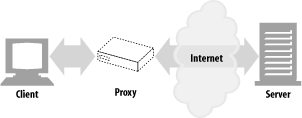
Figure 1-11. Proxies relay traffic between client and server
Proxies are often used for security, acting as trusted intermediaries through which all web traffic flows. Proxies can also filter requests and responses; for example, to detect application viruses in corporate downloads ...
Read now
Unlock full access


 O’Reilly covers everything we've got, with content to help us build a world-class technology community, upgrade the capabilities and competencies of our teams, and improve overall team performance as well as their engagement.I wanted to learn C and C++, but it didn't click for me until I picked up an O'Reilly book. When I went on the O’Reilly platform, I was astonished to find all the books there, plus live events and sandboxes so you could play around with the technology.I’ve been on the O’Reilly platform for more than eight years. I use a couple of learning platforms, but I'm on O'Reilly more than anybody else. When you're there, you start learning. I'm never disappointed.I'm always learning. So when I got on to O'Reilly, I was like a kid in a candy store. There are playlists. There are answers. There's on-demand training. It's worth its weight in gold, in terms of what it allows me to do.