September 2002
Intermediate to advanced
656 pages
22h 14m
English
The HTTP-NG working group has invested much of its energy in the development of the WebMUX standard for message transport. WebMUX is a sophisticated, high-performance message system, where messages can be transported in parallel across a multiplexed TCP connection. Individual message streams, produced and consumed at different rates, can efficiently be packetized and multiplexed over a single or small number of TCP connections (see Figure 10-2).
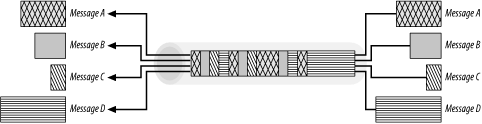
Figure 10-2. WebMUX can multiplex multiple messages over a single connection
Here are some of the significant goals of the WebMUX protocol:
Simple design.
High performance.
Multiplexing—Multiple data streams (of arbitrary higher-level protocols) can be interleaved dynamically and efficiently over a single connection, without stalling data waiting for slow producers.
Credit-based flow control—Data is produced and consumed at different rates, and senders and receivers have different amounts of memory and CPU resources available. WebMUX uses a “credit-based” flow-control scheme, where receivers preannounce interest in receiving data to prevent resource-scarcity deadlocks.
Alignment preserving—Data alignment is preserved in the multiplexed stream so that binary data can be sent and processed efficiently.
Rich functionality—The interface is rich enough to support a sockets API.
You can read more about the WebMUX Protocol at http://www.w3.org/Protocols/MUX/WD-mux-980722.html ...
Read now
Unlock full access


 O’Reilly covers everything we've got, with content to help us build a world-class technology community, upgrade the capabilities and competencies of our teams, and improve overall team performance as well as their engagement.I wanted to learn C and C++, but it didn't click for me until I picked up an O'Reilly book. When I went on the O’Reilly platform, I was astonished to find all the books there, plus live events and sandboxes so you could play around with the technology.I’ve been on the O’Reilly platform for more than eight years. I use a couple of learning platforms, but I'm on O'Reilly more than anybody else. When you're there, you start learning. I'm never disappointed.I'm always learning. So when I got on to O'Reilly, I was like a kid in a candy store. There are playlists. There are answers. There's on-demand training. It's worth its weight in gold, in terms of what it allows me to do.