February 2006
Intermediate to advanced
826 pages
63h 42m
English
The key to creating web pages that resize proportionally to fill the browser is using relative measurements, such as percentages) in your style sheets, tables, or frames or not specifying measurements at all and allowing elements to size automatically.
As an example, let’s consider a web page that is divided into
two sections: a main content column and a links column (Figure 3-1). By using percentage
values for the divs, table cells,
or frame measurements, the columns and elements will remain
proportional to one another. In this example, the main content column
takes up 75% of the screen regardless of the size of the browser
window. Note that the content of that column reflows to fill the
available width.
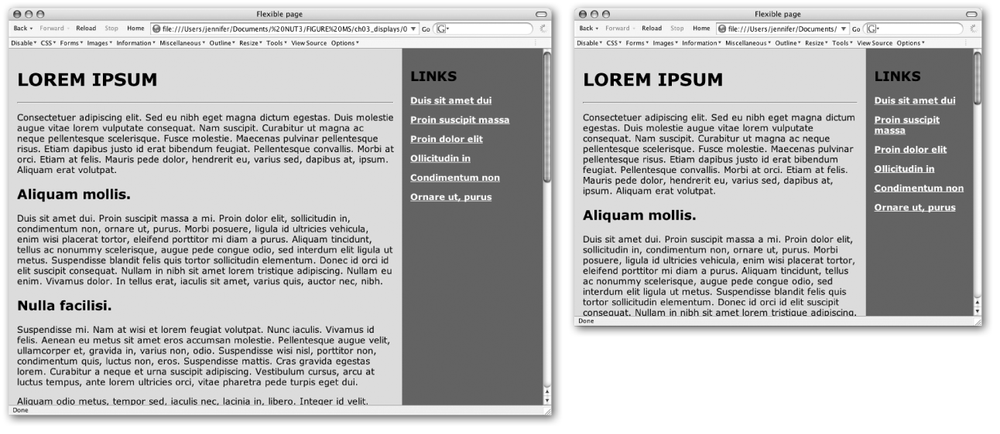
Figure 3-1. A flexible web page with proportional columns
Using style sheets, you can also set the contents of the page to flex based on the user’s text size preference by setting measurements in ems, a unit used in printing to refer to the width of one capital letter M. In CSS, an em is equal to the font size; in other words, an em unit in 12-point text is 12 points square. Using em measurements for element dimensions, margins, line-height, and so on ensures that page elements scale proportionally with the user’s chosen text preference.
Read now
Unlock full access


 O’Reilly covers everything we've got, with content to help us build a world-class technology community, upgrade the capabilities and competencies of our teams, and improve overall team performance as well as their engagement.I wanted to learn C and C++, but it didn't click for me until I picked up an O'Reilly book. When I went on the O’Reilly platform, I was astonished to find all the books there, plus live events and sandboxes so you could play around with the technology.I’ve been on the O’Reilly platform for more than eight years. I use a couple of learning platforms, but I'm on O'Reilly more than anybody else. When you're there, you start learning. I'm never disappointed.I'm always learning. So when I got on to O'Reilly, I was like a kid in a candy store. There are playlists. There are answers. There's on-demand training. It's worth its weight in gold, in terms of what it allows me to do.